The Copom cut the Selic rate by 25 basis points, from 14.00% to 13.75%, its fifth consecutive cut of that size. The decision matched consensus expectations and reinforced the gradual strategy adopted since March. The underlying message is clear: there is room for further monetary easing, but that room remains conditional on inflation, activity, the exchange rate and the external environment.
Domestically, conditions improved enough to justify another cut. August IPCA came in at -0.32% month-on-month and slowed to 4.22% over 12 months. At the same time, activity indicators point to lost momentum in sectors that are more sensitive to interest rates. This combination — more benign inflation and less robust growth — is typically the natural backdrop for a central bank to lower its policy rate.
The problem is that the world became less cooperative just as Brazil gained some room to cut. The Federal Reserve raised rates again, the Bank of Japan also tightened monetary policy, and oil continues to add noise to global disinflation. In other words, the Copom does not operate in a vacuum: every Selic cut takes place in an environment where Brazil's interest-rate differential with the United States narrows, making the currency and the long end of the curve more sensitive.
For this reason, the most important aspect of the decision is not the absolute level of the Selic rate, but the calibration signal. The Central Bank is trying to provide relief without fostering a perception of complacency. This balance is even more important in a country entering the final stretch of an election cycle while still facing fiscal uncertainty. The debate is therefore no longer simply whether the Selic will fall further, but how far it can fall without reigniting pressure on expectations and the currency.
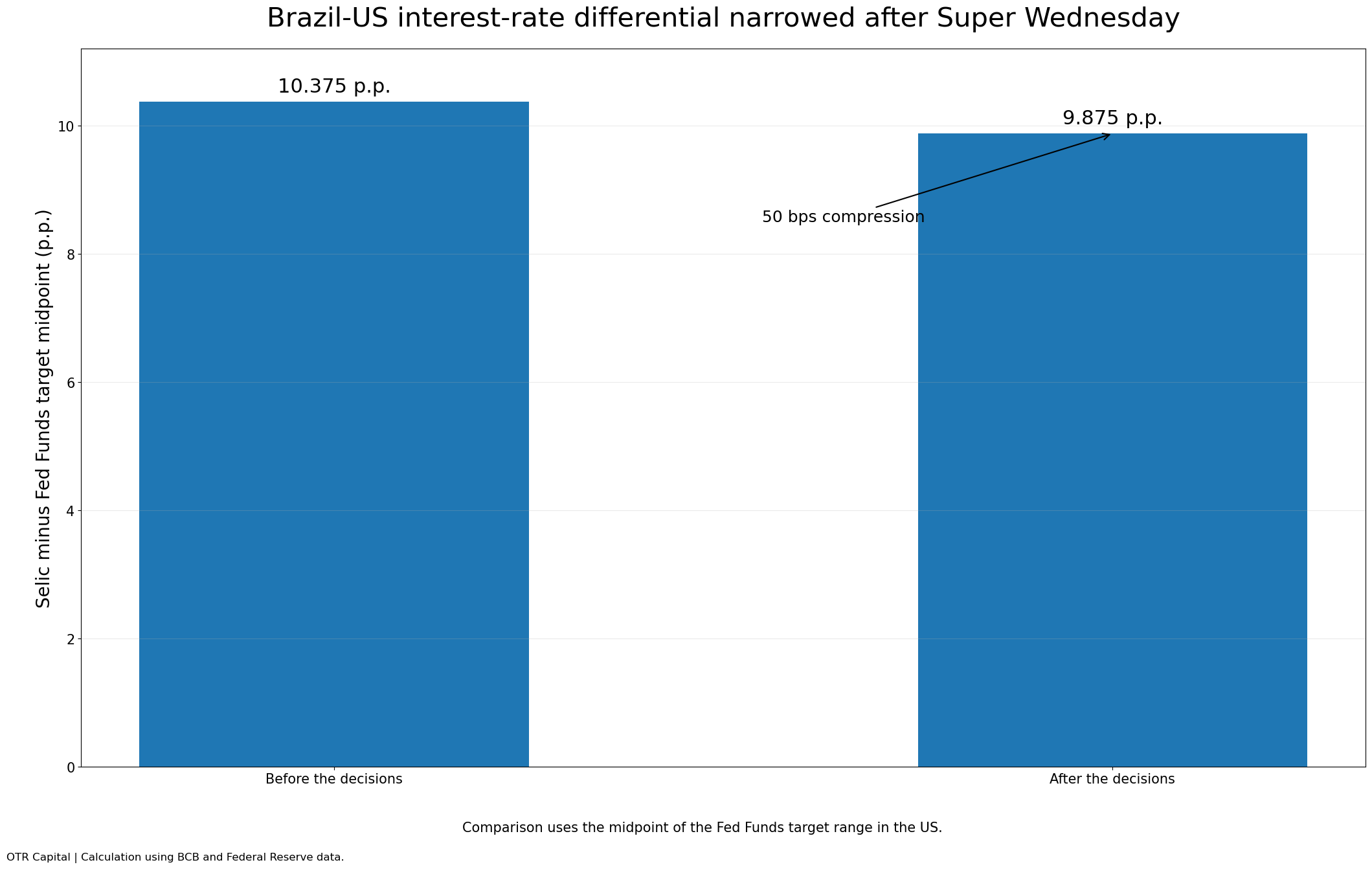
Figure 1. The Selic–Fed Funds differential narrowed after the Super Wednesday decisions.
In summary
- Inflation improved enough to allow further cuts, but continued easing still depends on the external environment.
- The Brazil–US interest-rate differential remains wide, though less comfortable than it seemed a few weeks ago.
- The Copom's main asset at this stage is caution: small cuts help preserve the cycle's credibility.
Sources
- Central Bank of Brazil — history of Copom decisions and the 13.75% Selic rate at its 281st meeting. Access source
- IBGE — August 2026 IPCA: -0.32% month-on-month and 4.22% over 12 months. Access source
- Reuters — Brazil central bank cuts rates fifth straight meeting and leaves next move open (16 Sep 2026). Access source
Visual note: charts were prepared for OTR Capital from the sources listed; illustrative images were generated with AI where a chart would not serve the editorial purpose.